The #1 Reason Cylinders Miss Hydro Tests
Can you recall when you got your last tetanus shot? When your passport needs renewal?
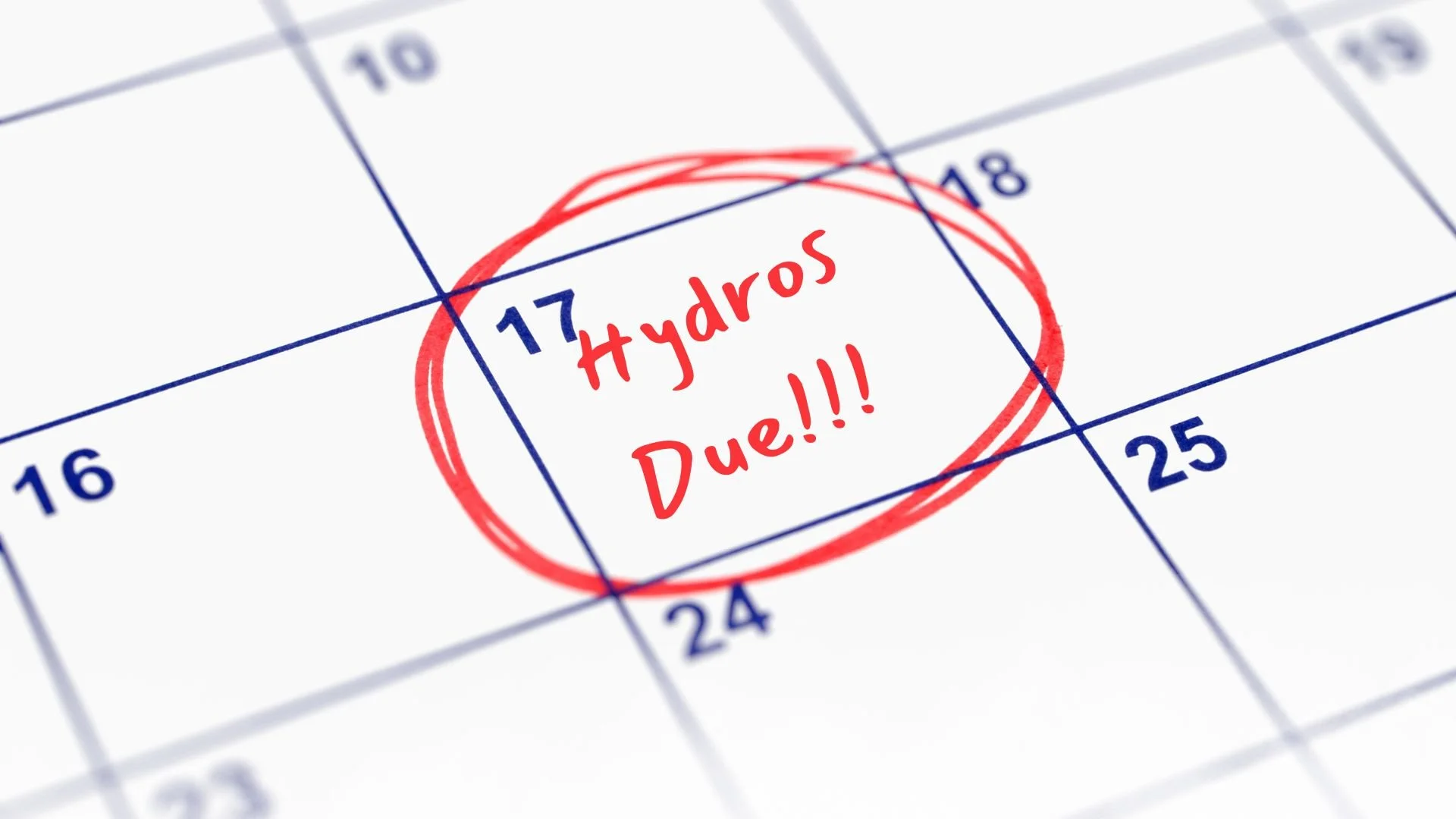
When measuring tasks in decades, not years, it’s easy to lose track. Which is why it’s so challenging to track cylinders’ hydro test dates.
In our experience, forgetfulness - not equipment failure - is the most common reason for a cylinder to get pulled from service.
Even the most well-managed departments miss their cylinders’ hydro and visual inspections.
Think of it this way — a 10 year cylinder bought in 2026 won’t be due until 2036. During that time, the department has probably had several different fire chiefs, SCBA program managers and administrative staff. They’ve even seen three sitting U.S. presidents.
Without an efficient and regularly maintained tracking system, that cylinder’s hydro test could easily be forgotten and the consequences range from compliance issues to reduced response capability. Either way, the whole department is impacted.
SOLUTIONS
Option 1: Build an Internal Tracking System
Maintain a current cylinder inventory
Use reminders/calendar alerts or an asset management system
Review annually
Most importantly, ensure your department has a standardized hand-off procedure during personnel changes. Your system is only effective if each new program manager can confidently access and update it.
Option 2: Work With A Service Provider That Tracks Due Dates
Tracks cylinder condition and due dates
Updates departments of maintenance schedule
While an internal tracking system is still required, having an additional resource managing your inventory significantly reduces the risk of missed services. Many departments include their hydros as part of a broader maintenance plan. This offers an additional layer of accountability and peace of mind.
AOS offers consultation in SCBA program management along with extensive maintenance programs to ensure departments stay in compliance and ahead of services.